Process.
Standards.
Record.
Warsaw, 2026. The Elorani methodology is a documented sequence — from initial ingredient sourcing through independent batch analysis to final lot archiving. Each step in the chain is recorded and traceable. There are no undocumented stages.
The Formulation Sequence
Ingredient Identification & Selection
Each formulation cycle begins with a structured ingredient review. Candidate materials are assessed against published nutritional research for their established roles in normal physiological processes. Ingredient profiles are then cross-referenced with the Elorani elemental balance framework, which maps daily intake requirements to the active lifestyle demands of the male composition.
Botanical materials are assessed separately for origin documentation. Each botanical candidate must have a named-region material record on file before it enters the formulation shortlist. This stage typically produces a shortlist of 12–18 materials per formulation cycle.
Supplier Qualification & Sourcing Audit
Active ingredients are sourced from documented suppliers whose facilities maintain food-grade processing standards. Each supplier undergoes a qualification review that includes verification of chain-of-custody documentation, production facility records, and storage standards. Supplier records are retained in the Elorani archive with revision numbers assigned per audit cycle.
Regional sourcing is prioritised where documentation density is highest. The archive maintains supplier locale records for each material, enabling traceable sourcing from named regions to final formulation. No materials are accepted without a documented supplier qualification on file.
Formulation & Ratio Calibration
Shortlisted materials are combined according to the Elorani calibration framework. Ingredient ratios are set to reflect the interplay between micronutrient roles — for example, magnesium and vitamin B6 are co-formulated at calibrated levels because published nutritional research recognises their complementary contributions to normal energy metabolism and the reduction of tiredness.
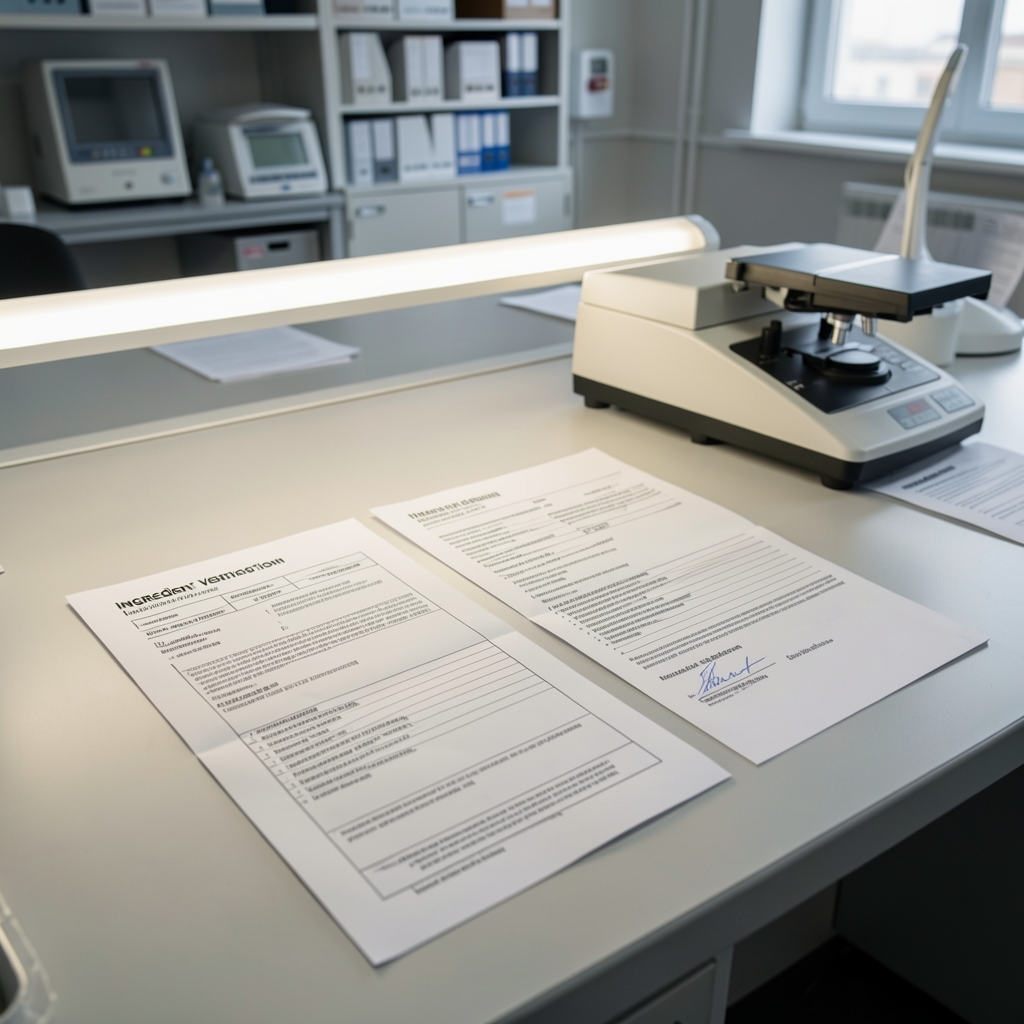
Each formulation is assigned a composition record document, detailing ingredient name, supplier reference, lot number, and the input level per daily measure. This document becomes the master reference for all subsequent verification and archiving stages.
Independent Batch Verification
Ingredient profiles in Elorani supplements are selected based on published nutritional research and undergo independent batch verification for quality and labelling accuracy. Each production batch is assigned a batch code and submitted to an independent laboratory for elemental concentration analysis. Results are compared against the composition record document established in Step 03.
Batches that meet the compositional specification are assigned a certificate of composition, which is retained in the Elorani archive under the relevant lot number. Batches that fall outside specification thresholds are quarantined and reviewed before a release decision is made. The archive records both passing and reviewed batches in the lot record.
Labelling Review & Regulatory Classification
Elorani products are nutritional food-supplements registered with the applicable local regulatory authority under food-supplement classification. Products meet compositional and labelling requirements for nutritional supplement categories. The labelling review stage ensures that every label claim is traceable to the composition record document and that ingredient quantities declared on the label match verified batch data.
Label design and copy are reviewed against food-supplement labelling regulations before each production run. Revision numbers are assigned to label versions and retained in the archive.
Lot Archiving & Traceability Record
Once a batch has been verified, labelled, and released, it is entered into the Elorani lot archive. The lot record contains the batch code, production date, formulation version reference, certificate of composition lot number, supplier references for all materials, and the label version number. The archive is maintained with sequential revision numbers.
Traceability from raw material origin to finished lot is maintained throughout the archive. In the event of a sourcing or composition query — whether from a customer, partner, or regulatory reviewer — the archive enables a full chain-of-custody response within standard documentation timelines.
The Standards
Framework
Elorani's quality framework is built around three pillars: traceable origin, independent verification, and documented archiving. No stage in the chain operates outside these constraints.
The framework was formalised in 2023 as the archive grew beyond a single-supplier sourcing model. As the number of formulations and ingredient sources expanded, the methodology was revised — currently at Revision 08 — to accommodate multi-supplier traceability requirements and more granular batch analysis specifications.
Each revision of the methodology document is archived with its revision number and effective date. Historical revisions are retained and available on request through the Warsaw documentation team.
Every ingredient has a named-region material record, a supplier qualification file, and a chain-of-custody reference traceable to the production lot.
No batch enters the lot archive without an independent laboratory analysis result on file. The certificate of composition is a prerequisite for release, not an optional attachment.
All formulation records, supplier qualifications, batch analysis results, label versions, and methodology revisions are stored in the Elorani archive under sequential revision numbers.
Sourcing prioritises suppliers whose facilities maintain food-grade processing standards. Each batch is accompanied by a certificate of composition and independent elemental verification.
Sourcing Geography
Central European Origin
Plant-based active ingredients sourced from Central and Northern European cultivation regions. Botanical supplier records include harvest season, processing method, and lot reference. Origin map archived per ingredient.
Documented Processing Facilities
Inorganic mineral forms — zinc, magnesium, selenium — are sourced from suppliers with documented production facility records. Elemental purity is verified per batch through independent concentration analysis.
High Bioavailability Forms
Vitamin D3 (cholecalciferol), B12 (methylcobalamin), and Vitamin C (ascorbic acid) are selected in forms documented for normal absorption profiles. Supplier records include production date, storage conditions, and chain-of-custody reference.
Methodology Questions
Elorani products are nutritional food-supplements registered with the applicable local regulatory authority under food-supplement classification. Products meet compositional and labelling requirements for nutritional supplement categories.
We recommend speaking with a qualified wellness or nutrition professional before introducing any supplement to your daily routine, particularly if you have specific dietary requirements. Ingredient profiles in Elorani supplements are selected based on published nutritional research and undergo independent batch verification for quality and labelling accuracy.